Every business we run stands on one technology we own.
SESSIA is the group's in-house technology company: one platform of apps, commerce, community, CRM and AI that every FIG business plugs into from day one. It is why our companies out-retain and out-move competitors many times their size.
One operating system. Every business plugs in.
A new FIG business doesn't start from zero. It starts with a mobile app, a store, its own social community, loyalty, logistics tracking and customer support that already knows the client — because all of it already exists as SESSIA infrastructure.
The Vision turnaround: what the platform does to a real P&L.
Vision peaked in 2008, while listed on the Cyprus Stock Exchange, a $119M in turnover. By the end of 2016 that had fallen to $34.9M. In 2017, Freedom International Group merged with Vision; people close to the deal valued the combined company's assets at up to $150M, with founder Narek Sirakanyan targeting $75M in combined turnover by the end of 2018. We moved the business onto our stack — a new CRM, a mobile app with a built-in community, and AI in customer operations at a very early stage.
Figures: Cyprus Stock Exchange public filings (2008) and public reporting on the 2017 Freedom–Vision merger. Sources: CSE filing · merger coverage — technology worked together with a new operating team; we claim the system, not magic.
The loyalty machine: six reasons a customer returns.
Retention is engineered, not wished for. Every SESSIA app closes the same loop:
In our support flow, 4 of 5 conversations come from returning customers.
We removed the assembly line. One engineer owns the whole feature.
This is the core of how a 29-person team runs the technology of eight businesses at once — and why we have always shipped like companies five to ten times our size.
Seven hand-offs per feature
Meaning leaks at every hand-off. Everyone is always waiting for someone.
Full-cycle engineers, AI-amplified
One team. The output of organisations 5–10× our headcount.
Quality and design are staffed, not declared.
Deliberately over-weighted QA
For 12 core engineers we keep 3 dedicated quality specialists — one for every four developers, roughly double the industry's proportion. It is a conscious tax we pay so that ~20 releases a year on FIRSTLINE ship without breaking what customers already love.
Design as a first-class discipline
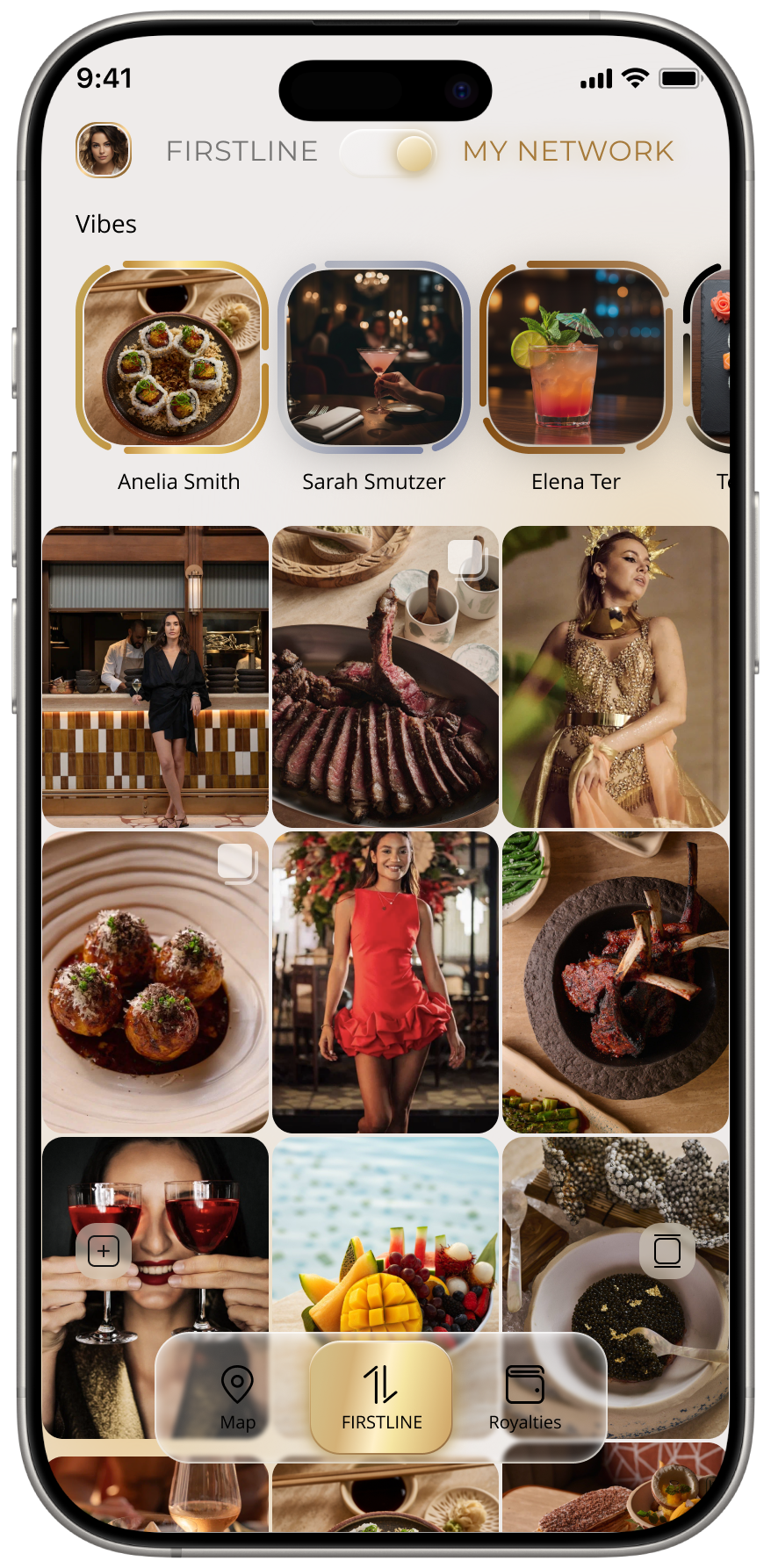
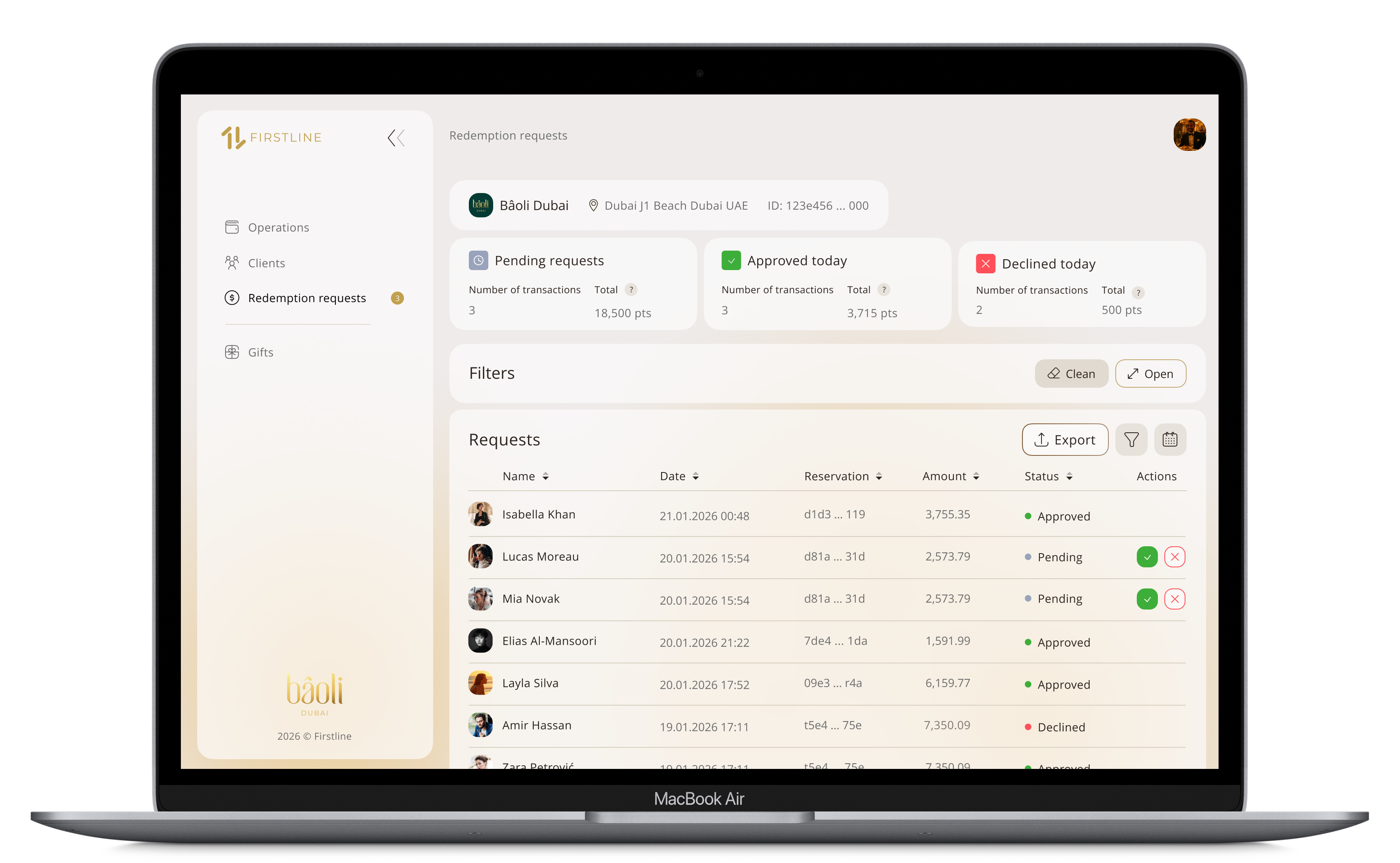
Five designers on a 29-person team. Every product is built to be understood without a manual — with motion and micro-animations in places you don't expect them. FIRSTLINE is the showcase: features running on technology most hospitality apps simply don't have yet. Try the elements below — this is what we mean:
25+ microservices. A new business goes live in weeks.
Nothing in our stack is a monolith we're afraid to touch. Commerce, community, payments, loyalty, logistics, support — each is a light, independent service. Launching a new business means assembling proven blocks, not writing a platform from scratch. That's how qTest gets a marketplace, Nikol AI support covers every brand, and Treserve issued its first cards — in weeks, not years.
Simplified view — 25+ services in production. Each block is reused by every business that needs it.